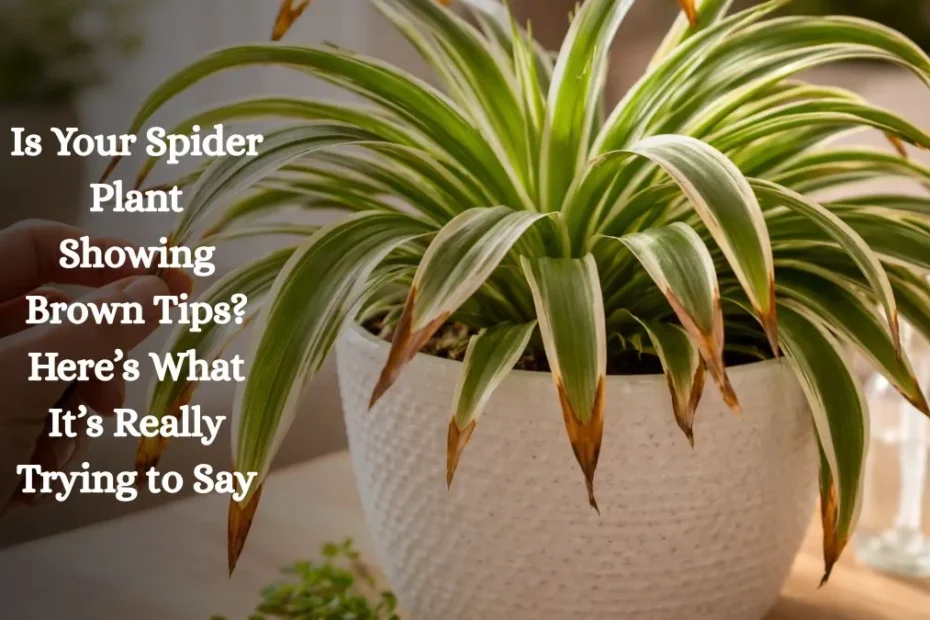
Have you recently noticed brown, dry tips forming on the leaves of your spider plant? While it may look worrying at first, this common issue is actually your plant’s way of sending subtle signals about its environment and care routine.
Understanding these signs can help you correct small mistakes and restore your plant’s healthy, green glow.
Let’s explore what those crispy edges truly mean and how you can fix them.
The Hidden Messages Behind Brown Leaf Tips
Imagine starting your day with a cup of coffee and glancing at your once-thriving indoor spider plant, only to see the tips turning brown. It might seem like a serious problem, but in most cases, it’s simply feedback.
Spider plants are known for their resilience, but their leaf tips are sensitive. When something is slightly off — whether it’s water quality, watering habits, or indoor climate — the plant shows it first at the edges.
These burnt-looking tips aren’t random. They’re signals.
Water Quality: The Overlooked Cause
Many plant owners assume the issue is strictly about overwatering or underwatering, but sometimes the real problem lies in the tap water itself.
Spider plants are sensitive to:
- Chlorine
- Fluoride
- Excess salts
- Mineral buildup
These substances can accumulate in the soil over time. As a result, the leaf tips begin to dry out and turn brown. If you notice a white crust forming on the soil surface, mineral buildup may be the culprit.
What You Can Do:
- Use filtered water or distilled water.
- Let tap water sit overnight before using it.
- Occasionally flush the soil thoroughly to remove salt buildup.
Understanding the Roots: A Delicate Balance
Spider plants store water in their thick roots, almost like tiny reservoirs. This means they are more tolerant of slight dryness than constant moisture.
However, problems occur when:
1. Overwatering
If roots stay soaked for too long, they cannot breathe. This leads to stress and eventually shows up as brown leaf tips.
2. Underwatering
When the plant becomes too dry, it sacrifices moisture from the leaf tips first, causing them to crisp up.
The key is balance.
The Myth of Scheduled Watering
One of the most common mistakes is sticking to a fixed watering schedule — such as watering every Sunday without checking the soil.
Seasons change, and your plant’s needs change too:
- In summer, your spider plant may need watering every few days.
- In winter, watering intervals should be longer due to slower growth.
Instead of relying on the calendar, try this:
Smart Watering Tips
- Insert your finger into the soil before watering.
- If it feels cool and moist, wait.
- When watering, do it thoroughly until water drains from the bottom.
- Avoid light surface watering — roots need deep hydration.
Environmental Factors You Might Be Ignoring
Sometimes the issue has nothing to do with watering at all.
Ask yourself:
- Is your plant placed near a radiator?
- Is it exposed to dry indoor air during winter?
- Does the pot have proper drainage holes?
Low humidity and poor airflow can dry out leaf edges. Similarly, pots without drainage trap excess water, causing root stress.
Small environmental changes can make a noticeable difference.
Reading the Signals: Listening to Your Plant
Instead of seeing brown tips as a failure, think of them as guidance. Your spider plant is adapting to your care routine and environment.
A plant expert once said, “It’s not the plant that’s failing — it’s adjusting to what you’re giving it.”
Observe closely:
- Does your soil dry too quickly?
- Does water leave residue behind?
- Does the pot feel unusually heavy?
These tiny observations can prevent larger issues.
How to Revive Your Spider Plant
If your plant already has brown tips, don’t panic. Here’s how to improve its condition:
Step 1: Trim Damaged Tips
Use clean scissors to carefully remove brown edges. This improves appearance but won’t fix the root cause.
Step 2: Improve Watering Practices
Check soil moisture before watering and adjust frequency.
Step 3: Improve Water Quality
Switch to filtered or distilled water if possible.
Step 4: Check Drainage
Ensure your pot allows excess water to escape.
Step 5: Adjust Placement
Move the plant away from heat vents and direct hot air.
With proper care adjustments, new leaves will grow healthy and green.
Building a Better Plant Care Routine
Caring for a spider plant is less about strict rules and more about observation. Feeling the pot’s weight, checking soil texture, and noticing leaf changes can strengthen your understanding of its needs.
The goal isn’t perfection — it’s awareness.
Brown tips on your spider plant are not a disaster — they are informative signals. Whether caused by mineral-heavy tap water, inconsistent watering, poor drainage, or dry indoor air, these crispy edges help you fine-tune your plant care routine.
By paying attention to soil moisture, water quality, and environmental conditions, you can restore your plant’s lush appearance and prevent future damage. The key is observation and adaptability. When you listen carefully, your plant tells you exactly what it needs.
FAQs
1. Why does my spider plant keep getting brown tips?
The most common reasons include tap water chemicals, inconsistent watering, low humidity, or poor drainage.
2. Should I cut off brown tips from my spider plant?
Yes, you can trim them using clean scissors. However, you must correct the underlying issue to prevent new damage.
3. Can brown tips turn green again?
No, damaged tips won’t recover. But with proper care, new leaves will grow healthy and green.
Related Posts