Cleaning your oven is one of those household chores that many people delay for as long as possible. Burnt food particles, layers of sticky grease, and dark stains make the job look overwhelming. Over time, unpleasant smells from old spills can even affect the taste and aroma of your cooking.
But what if you could let your oven clean itself while you sleep?
The half-glass vinegar trick is a simple, affordable, and chemical-free oven cleaning method that uses gentle steam to loosen grime overnight. No harsh fumes. No expensive sprays. No aggressive scrubbing. Just vinegar, heat, and time.
In this guide, you will learn how this method works, how to apply it properly, and why it is so effective for everyday oven messes.
Why Ovens Become Dirty So Quickly?
Every time you roast vegetables, bake casseroles, or cook meat, tiny droplets of oil and food splash onto the oven’s interior surfaces. At high temperatures, these droplets harden and stick.
Common Reasons Oven Grime Is Difficult to Remove
- High heat seals grease onto surfaces
- Old spills turn into hardened residue
- Smoke odors become trapped inside
- Chemical cleaners leave behind strong smells or residue
Many people do not realize that heat combined with moisture can naturally soften stubborn buildup. This is exactly why the vinegar steam method works so well.
What Is the Half-Glass Vinegar Trick?
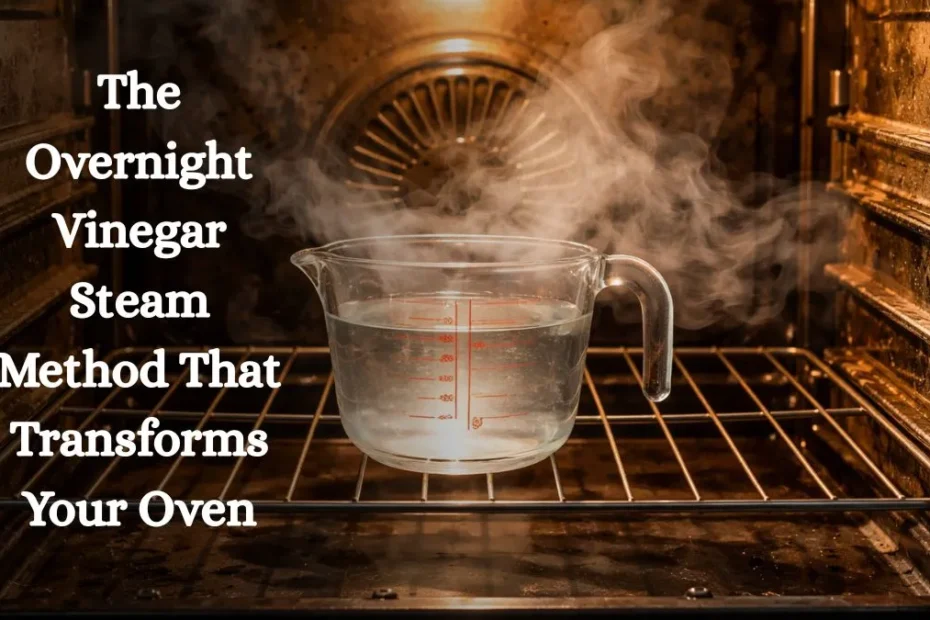
The half-glass vinegar trick uses heated vinegar to create steam inside the oven. This steam contains acetic acid, the active compound in vinegar that helps break down grime.
Vinegar’s Cleaning Power Comes From Acetic Acid
Acetic acid helps to:
- Soften hardened grease
- Loosen burnt-on food particles
- Neutralize strong odors
- Make wiping easier
Instead of scrubbing first and struggling with tough stains, this technique allows the steam to do most of the work overnight.
How the Vinegar Steam Works Overnight?
When vinegar is gently heated, it releases acidic steam that circulates throughout the oven. This steam reaches corners, crevices, and baked-on stains.
Over several hours, the steam works to:
- Break down grease layers
- Loosen carbon buildup
- Reduce smoke smells
- Weaken stubborn stains
By morning, most of the residue has softened, making it easy to wipe away with minimal effort.
Step-by-Step Guide to the Half-Glass Vinegar Method
This method is quick to set up and requires very few materials.
What You Will Need
- ½ glass of white vinegar
- An oven-safe bowl or glass dish
- A damp cloth or sponge
Step 1: Add Vinegar to the Oven
Pour half a glass of white vinegar into an oven-safe bowl. Place it securely on the middle rack.
Step 2: Warm the Oven Gently
Turn the oven to a low temperature between 120–150°C (250–300°F) for about 10–15 minutes.
This allows the vinegar to produce steam. Be careful not to let the vinegar evaporate completely.
Step 3: Turn Off and Leave Overnight
Switch off the oven and keep the door closed. Leave everything undisturbed overnight so the steam can continue softening grime for several hours.
Step 4: Wipe Clean in the Morning
In the morning, carefully remove the bowl. Use a damp cloth or sponge to wipe the interior.
You will notice that most grease and residue come off easily without heavy scrubbing.
What Types of Messes Does This Clean Best?
The vinegar steam oven cleaning method works especially well on:
- Grease splashes
- Food drips
- Sticky residue
- Smoke smells
- Light to moderate baked-on stains
For thick or very old carbon buildup, you may need to repeat the process a second time.
Why Choose Vinegar Over Chemical Oven Cleaners?
Many commercial oven cleaners contain harsh chemicals that can irritate your skin, eyes, and lungs.
Drawbacks of Chemical Cleaners
- Strong, unpleasant fumes
- Potential skin irritation
- Chemical residue left behind
- Not ideal for frequent use
Benefits of Using Vinegar
- Non-toxic and food-safe
- Affordable and widely available
- Leaves no harmful residue
- Safe for homes with children and pets
- Suitable for regular maintenance
This makes vinegar a safer and more eco-friendly solution for routine oven cleaning.
Extra Cleaning Boost: Vinegar and Baking Soda
If your oven has stubborn patches, you can enhance the cleaning power the next morning.
How to Use Baking Soda for Tough Spots
- Sprinkle a small amount of baking soda over problem areas.
- Lightly spray or dab vinegar onto the baking soda.
- Let the fizzing reaction sit for 5–10 minutes.
- Wipe clean with a damp cloth.
The bubbling reaction helps lift deeply embedded grime.
How Often Should You Use This Method?
To prevent heavy buildup, follow this general schedule:
- Light oven use: Every 4–6 weeks
- Frequent oven use: Every 2–3 weeks
- After spills or smoky cooking: As needed
Regular maintenance prevents grease from hardening into stubborn layers.
Important Safety Tips
Although this method is safe, follow these precautions:
- Use only oven-safe containers
- Do not allow vinegar to boil dry
- Keep the oven door closed overnight
- Never mix vinegar with chemical cleaners
- Ventilate the kitchen in the morning if necessary
When used properly, this method is both safe and effective.
Why the Overnight Method Is So Effective?
The real secret behind this technique is time.
While you sleep, the vinegar steam has hours to:
- Penetrate layers of grime
- Soften hardened grease
- Break down odors naturally
Instead of spending hours scrubbing, you wake up to an oven that is already prepared for easy cleaning.
The half-glass vinegar trick proves that powerful cleaning does not require harsh chemicals or expensive products.
By using simple vinegar steam cleaning, you can soften grease, loosen burnt food, and eliminate odors naturally overnight.
With just a small amount of vinegar, an oven-safe bowl, and a few minutes of preparation, your oven can look refreshed and ready for use by morning.
Regular use of this method keeps buildup under control and makes deep cleaning far less stressful.
Sometimes the most effective cleaning solutions are also the simplest. Let time and steam do the hard work while you rest.
FAQs
1. Can I use apple cider vinegar instead of white vinegar?
White vinegar is recommended because it contains higher acidity and does not leave additional residue or color behind.
2. Is it safe to leave vinegar in the oven overnight?
Yes, as long as the oven is turned off and the vinegar is placed in an oven-safe bowl, it is safe.
3. Will this method remove very heavy carbon buildup?
It works well for light to moderate buildup. Extremely thick carbon layers may require repeated treatments or gentle scrubbing.
Related Posts