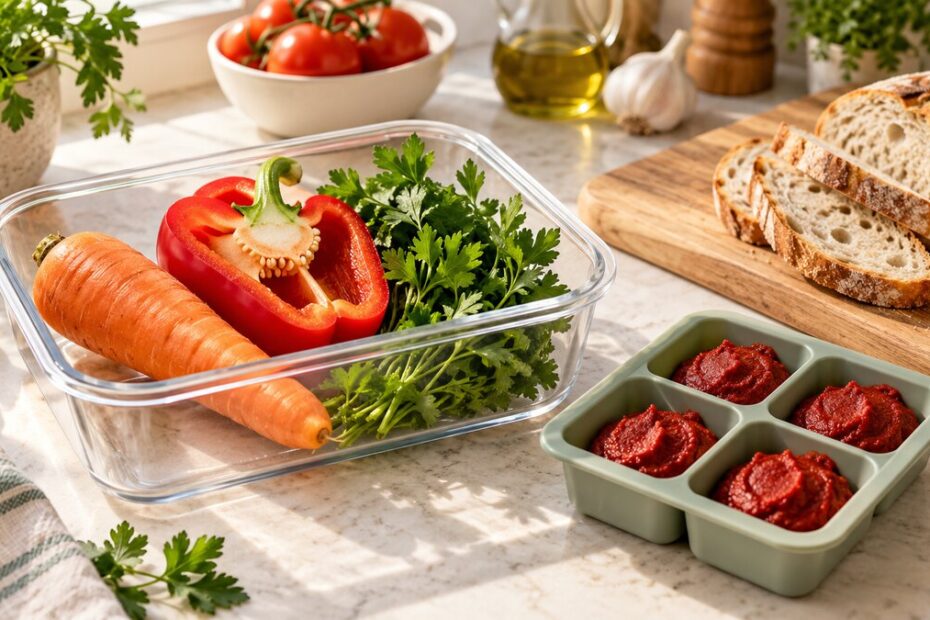
You open the fridge, spot half a pepper, yesterday’s vegetables and a bunch of herbs, then decide there is nothing for dinner. The problem is often that the ingredients have no obvious next step.
A short fridge reset gives those odds and ends a purpose. Set aside 15 minutes before your next grocery trip to identify what needs using, portion what you can freeze and sketch out one easy meal. These seven food hacks turn that small routine into a practical cooking habit.
1. Create a “Use It First” Zone
Choose one visible area for foods that need attention soon. Keep everything in suitable covered containers or its original packaging. If moving produce would disrupt its proper storage, leave it where it belongs and add it to a short fridge-door list instead.
Include opened ingredients and dated leftovers you can still safely use. Keep raw meat separate, contained and below ready-to-eat foods.
Before deciding on dinner, check this zone. Half a pepper might become a sandwich filling; a spoonful of cooked vegetables might join an omelette. Visibility gives you a starting point when you are tired and hungry.
2. Freeze Tomato Paste in Recipe-Sized Portions
A recipe calls for one tablespoon of tomato paste, leaving most of the container behind. Portion the remainder while you already have the spoon out.
Measure tablespoon-sized amounts into a clean freezer-safe tray, cover and freeze. Once firm, transfer the portions to a sealed freezer container and label the contents, date and portion size. Utah State University Extension includes this technique in its quick kitchen tips.
The next time you make soup, chilli or pasta sauce, take the quantity the recipe needs. Portioning also makes it easier to see whether you actually need another container on your shopping list.
3. Give Fresh Herbs a Second Job
Buy herbs for a garnish, then plan a cooked dish for the remainder. Parsley could flavour soup; dill could go into a sauce. If you cannot use the herbs promptly, freeze them while they are still fresh.
Rinse, dry and chop them, then freeze small portions in water using an ice-cube tray. Transfer the frozen cubes to a labelled freezer bag. Penn State Extension’s herb-freezing guide explains this method and notes that thawed herbs become limp, making them better suited to cooked dishes than attractive garnishes.
Choose the portion size around your cooking habits so the cubes are easy to use.
4. Slice Bread Before Freezing It
If you regularly struggle to finish a loaf, freeze part of it early. Slice it first, pack it securely in a freezer bag and separate slices with small pieces of baking parchment if they tend to stick.
You can then remove enough for one breakfast or sandwich without defrosting the whole loaf. Toast suitable slices from frozen using your appliance’s instructions, or thaw the amount you need while keeping the remainder frozen.
The EPA’s advice on preventing food waste recommends freezing bread and other foods you will not eat in time. The useful habit is acting while the bread is still worth saving.
5. Pack Leftovers for One Future Meal
A large container of leftovers can feel like another cooking project. Divide food into portions that match how your household actually eats: one lunch, two dinner servings or enough sauce for a planned pasta meal.
Use shallow containers for prompt cooling. For suitable chilled soups or sauces, a freezer-safe bag laid flat on a tray can create a stackable package; leave expansion room and follow the bag’s instructions.
Write a meal suggestion beside the date: “lentil soup—lunch” or “tomato sauce—two portions.” That small note makes the package easier to recognise and gives you a reason to retrieve it.
Include the original cooking date on refrigerated leftovers; transferring them into a new container does not restart the storage clock. If you freeze a portion, record its freezing date separately. Move older suitable portions towards the front so fresh additions do not accidentally hide yesterday’s cooking behind them.
6. Match Small Vegetable Portions to a Meal Format
Instead of searching for a recipe for every leftover ingredient, choose a flexible meal format. A wrap, soup, omelette or pasta dish can accommodate modest quantities.
For example, soften sliced pepper and onion in a pan, add drained canned beans and season to taste. Serve in wraps with a little cheese or yoghurt. Already-cooked vegetables could become a different filling, provided they were stored safely and are reheated appropriately.
Keep flavours compatible and avoid adding everything simply because it is available. Two vegetables that work together can produce a more appealing dinner than a crowded mixture you do not enjoy.
7. Write Tomorrow’s Dinner Before Buying More Food
Finish the reset with one specific sentence: “Tomorrow: bean wraps with pepper and onion.” Then check whether you already have the supporting ingredients.
Your shopping list might need wraps, rather than another complete dinner’s worth of groceries. Keep a separate note of frozen portions so they stay part of your planning.
After a week, notice what repeatedly goes unused. If a large herb bunch keeps becoming a freezer project, buy a smaller amount when possible. The reset becomes more useful when it changes the next shopping decision as well as tonight’s meal.
Keep the Food-Safety Basics in Place
Organising food does not extend its safe storage life. The FDA recommends a refrigerator temperature of 40°F/4°C or below and a freezer at 0°F/−18°C or below. Refrigerate perishables within two hours, or one hour when temperatures exceed 90°F/32°C.
USDA guidance advises using refrigerated leftovers within three to four days or freezing them for longer storage. Reheat leftovers to 165°F/74°C throughout. Freezing does not make spoiled or improperly handled food safe.
Use your 15 minutes to make decisions, rather than trying to cook everything at once. Identify one meal, freeze a few useful portions and put the rest away promptly. Next time you open the fridge, dinner already has a starting point.
Related Posts