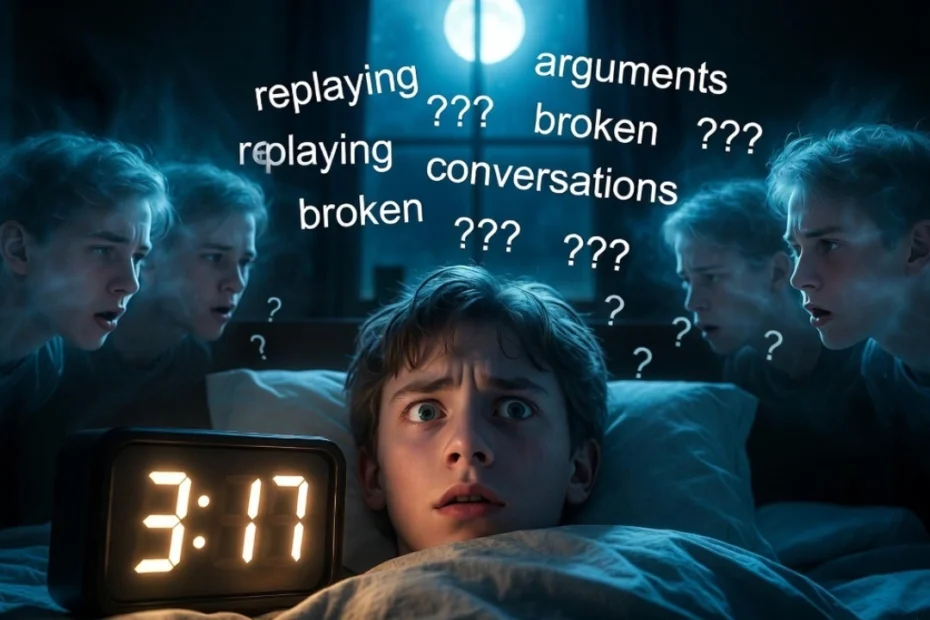
Overthinking at Night: Have you ever noticed how your mind suddenly becomes extra active the moment you try to sleep? During the day, you might handle stress easily, stay busy, and move on. But at night, even small worries can feel big and heavy.
This happens to millions of people every day. You are not alone. That quiet time at night creates the perfect space for your thoughts to grow louder, deeper, and sometimes overwhelming. Let’s understand why overthinking feels worse at night and what you can do to control it.
The Science Behind Nighttime Overthinking
Your brain does not suddenly create new problems at night. Instead, it finally gets time to process what you ignored during the day.
What Happens in Your Brain at Night?
- During the day, your brain is busy with work, social media, conversations, and tasks
- At night, distractions disappear
- Your brain switches into emotional processing mode
This is when your mind starts replaying:
- Past conversations
- Mistakes
- Worries about the future
Your brain is basically trying to organize your emotions, but sometimes it gets stuck in a loop.
Why Thoughts Feel More Intense at Night
At night, your brain becomes more emotional and less logical.
Key Changes That Make Overthinking Worse
| Factor | What Happens | Effect on Your Mind |
|---|---|---|
| Less Distraction | No work, no noise | Thoughts become louder |
| Low Cortisol | Stress hormone drops | You feel more sensitive |
| More Melatonin | Sleep hormone increases | Thinking becomes slower and emotional |
| Amygdala Activation | Emotional brain becomes active | Reactions feel stronger |
| Reduced Logic | Rational thinking reduces | Small problems feel big |
This is why something simple at 2 PM can feel like a big problem at 2 AM.
Common Nighttime Overthinking Triggers
Certain thoughts are more likely to appear when you are lying in bed.
Top Triggers
| Situation | Why It Feels Worse at Night |
|---|---|
| Arguments or fights | You replay conversations again and again |
| Work stress | No immediate solution makes you feel stuck |
| Past mistakes | Brain tries to “fix” what already happened |
| Future worries | Imagination becomes stronger than logic |
| Health concerns | You become more aware of your body |
The Role of Unresolved Emotions
When you ignore feelings during the day, they don’t disappear. They stay in your mind.
At night, your brain tries to deal with them.
Examples of Unfinished Emotions
- Feeling hurt after a conversation
- Regret about something you said
- Fear about upcoming events
- Guilt over decisions
Your brain treats these like unfinished tasks, so it keeps bringing them back.
Why Overthinking Affects Your Sleep
Overthinking creates a dangerous cycle:
- You start thinking too much
- You cannot sleep properly
- Poor sleep makes emotions stronger
- Next night, overthinking becomes worse
This leads to chronic stress and tiredness.
Simple Ways to Stop Overthinking at Night
You don’t need to stop thinking completely. You just need to guide your thoughts in a better way.
1. Create a “Worry Time” During the Day
Set aside 15–20 minutes daily to think about your worries.
Write them down and find solutions.
This trains your brain to process thoughts before bedtime.
2. Use the “Thought Parking” Method
Keep a notebook near your bed.
- Write down your thoughts
- Tell yourself: I will handle this tomorrow
This helps your brain relax.
3. Try the 3-3-3 Grounding Rule
When your mind races:
- Name 3 things you can see
- Name 3 sounds you can hear
- Notice 3 things you can feel
This brings your focus back to the present.
4. Relax Your Body First
Your mind follows your body.
Try:
- Deep breathing
- Progressive muscle relaxation
- Slow stretching
When your body calms down, your thoughts slow down too.
5. Avoid Nighttime Triggers
Reduce:
- Caffeine in the evening
- Heavy meals before sleep
- Phone usage in bed
These things can increase mental activity at night.
When You Should Seek Help
Occasional overthinking is normal. But you may need help if:
- It happens almost every night
- Your sleep is badly affected
- You feel tired all day
- It impacts your work or relationships
Therapies like CBT (Cognitive Behavioral Therapy) can help manage overthinking effectively.
Conclusion
Overthinking at night is not a weakness—it is your brain trying to process emotions. During the day, distractions hide your thoughts. At night, silence gives them space to come out.
The key is not to fight your thoughts but to manage them smartly. Simple habits like writing down worries, relaxing your body, and creating a routine can make a big difference. With the right approach, you can turn your nights into peaceful rest instead of stressful thinking sessions.
Related Posts