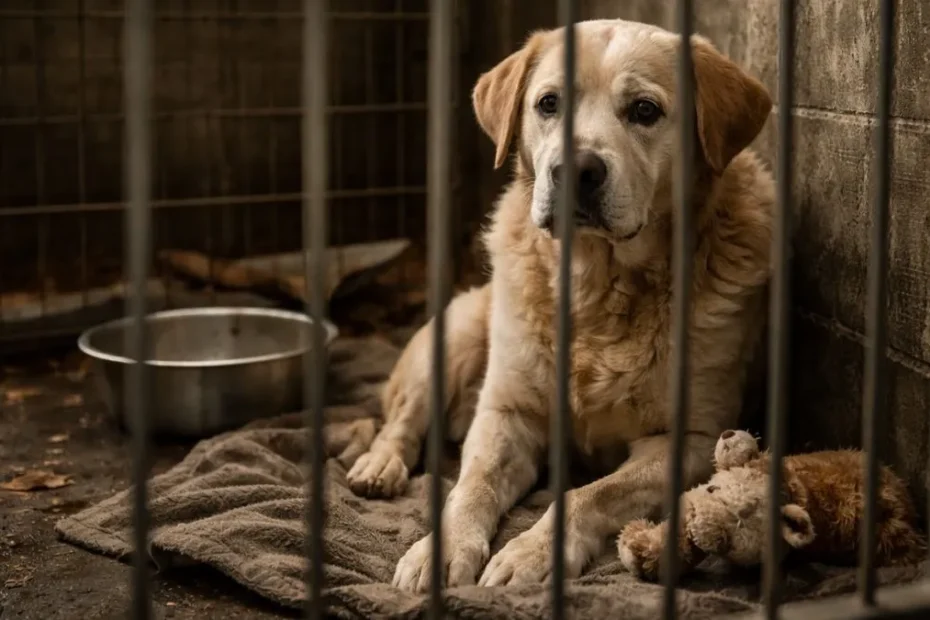
The dog began to cry the moment his family walked away. It wasn’t loud barking. It was a soft, aching whimper that filled the cold shelter hallway under the harsh fluorescent lights. The parents kept turning around, smiling and waving as they repeated the same comforting words: “We’ll come back for you. Just a few days. We promise.”
At the shelter, staff members hear those words more often than they wish they did. Still, hope is part of the job. One volunteer carefully wrote “Pending Pick-Up” on the dog’s file in blue marker and even drew a small heart beside it.
It felt like a temporary goodbye — the kind that ends happily. All that remained was to wait for the family to return with paperwork and smiles.
But weeks later, something else arrived instead of hope.
When Waiting Turns Into Silence?
The First Week: Optimism
For several days, everyone believed the family would return. The dog — a sturdy golden mix with deep amber eyes — jumped up every time the shelter’s front door opened. His tail wagged wildly against the kennel wall.
Staff tried to fill the silence with reasons.
Maybe they were busy.
Maybe they were arranging the adoption fee.
Maybe something delayed them.
The “pending” status remained untouched.
The Second Week: Doubt
After ten days, the atmosphere shifted. The cheerful blue label now felt uncomfortable. The dog stopped rushing forward each time the door opened. Instead, he sat quietly on his blanket, watching and listening.
A volunteer moved his crate closer to the hallway window so he could see the entrance more clearly. It was a small act of faith — as if visibility might somehow bring his family back faster.
The Third Week: Reality
By week three, the pattern felt painfully familiar. Calls to the contact number went unanswered. Emails bounced back. A visit to the listed address led nowhere.
Without drama, without confrontation, the dog’s file was updated. The status changed from “Pending Pick-Up” to “Abandoned.”
Abandonment rarely comes with shouting or conflict. Often, it looks like silence.
The Note That Delivered The Crushing Truth
The final blow arrived quietly.
One rainy Monday morning, staff discovered a folded note slipped under the shelter’s door. The edges were damp, the handwriting slightly smudged. Inside was a short explanation:
The family had taken the dog to a private veterinarian after leaving him at the shelter temporarily. He had received a medical diagnosis. The cost of treatment frightened them. They couldn’t afford the bills. Instead of facing the situation directly, they chose to walk away.
For the staff, everything suddenly made sense — the unanswered calls, the growing silence, the fading hope in the dog’s eyes.
He hadn’t been abandoned just once.
He had been abandoned twice.
The Complicated Reality Behind Pet Abandonment
From the outside, it’s easy to judge.
But when you look closer, life can be messy. Veterinary care is expensive. Emergencies arrive without warning. Families may convince themselves their pet will be better off somewhere else — with someone wealthier, calmer, or more prepared.
That comforting illusion helps people sleep at night.
At the shelter, however, that illusion looks like overcrowded kennels and limited budgets. Every broken promise eventually lands on the same place: the shoulders of shelter workers and volunteers who care for animals still waiting for footsteps that may never return.
How Animal Shelters Try To Prevent Broken Promises?
Behind the reception desk, there’s an invisible line staff must walk carefully. On one side is trust — believing adopters mean well. On the other side are rules and safeguards — deposits, background checks, waiting periods, and signed agreements.
Many shelters now require:
- A non-refundable deposit when someone says they will return for a dog.
- A defined holding period before changing status.
- Verified contact details and housing checks.
- Honest discussions about medical costs and long-term care.
These measures aren’t meant to punish families. They exist to anchor promises to something more solid than words.
Volunteers are also trained to notice warning signs. Avoiding questions about expenses. Being unclear about housing. Hesitation when discussing schedules. When concerns arise, shelters may suggest fostering first or direct families to lower-cost veterinary clinics.
The goal is not to discourage adoption.
The goal is to protect dogs from heartbreak.
What To Consider Before Saying “We’ll Be Back”?
Walking through a shelter can be emotional. Those hopeful eyes can make your heart decide faster than your mind.
Before making a promise, ask practical questions:
- What does this breed typically cost per year?
- Are there known health conditions?
- How much training might be required in the first few months?
These are not romantic questions. They are necessary ones.
At home, have honest conversations:
- Who walks the dog during busy weeks?
- What happens during travel or illness?
- Is pet-friendly housing truly secure?
- Is there an emergency fund for veterinary care?
Even a small savings cushion can prevent a crisis from becoming abandonment. Pet insurance, budgeting, and long-term planning make a real difference.
Adopting a dog doesn’t require perfection. It requires preparation.
The Emotional Cost On Both Sides
Shelter workers try not to become too attached — but they do. They learn each dog’s habits, favorite toys, and unique quirks. When someone promises to return, staff feel hopeful too.
When silence replaces that promise, there is quiet grief. Sometimes shelters create small goodbye rituals for animals leaving after long stays — a favorite treat, a final walk in the sunshine.
Families, too, carry invisible guilt. Children may grow up remembering a dog they loved but “couldn’t keep.” Without support or counseling, shame can prevent families from seeking help in the future, repeating the cycle.
That’s why some shelters now offer guidance and conversations during surrender. Compassion can stop history from repeating itself.
Small Actions That Change A Dog’s Future
Stories like this are not rare. Across shelters, volunteers regularly replace hopeful notes with harder truths.
But outcomes can change through small decisions:
- Waiting to adopt until financially ready.
- Choosing to foster instead of fully adopting.
- Donating toward medical bills.
- Sharing adoption posts online.
- Volunteering time.
These aren’t dramatic gestures. They are quiet corrections to a system stretched by good intentions.
Somewhere right now, a dog is waiting for footsteps. While we cannot undo every broken promise, we can choose to make stronger ones going forward.
Key Takeaways
| Key Point | Explanation | Benefit To Readers |
|---|---|---|
| Prepare Before Promising | Evaluate time, budget, housing, and support system first | Reduces risk of pet abandonment |
| Use Shelter Resources | Speak openly with staff about medical and behavioral needs | Helps ensure a successful long-term adoption |
| Support Beyond Adoption | Foster, donate, volunteer, or share shelter posts | Makes a positive impact even without adopting |
Promises feel powerful in the moment — especially inside a shelter where hopeful eyes meet emotional hearts. But adopting a dog requires more than love. It demands planning, honesty, and financial preparation. The story of this golden mix is not about blaming families.
It is about understanding how quickly good intentions can unravel without support. Shelters work tirelessly to protect animals from heartbreak, yet real change begins before a promise is spoken.
If we slow down, prepare carefully, and seek guidance, fewer dogs will wait behind metal bars for footsteps that never come.
FAQs
1. Why do families abandon dogs at shelters after promising to return?
Often, unexpected financial issues, especially expensive veterinary bills, cause families to reconsider. Some feel overwhelmed and avoid direct communication.
2. How do shelters protect animals from broken adoption promises?
Many shelters require deposits, verify contact information, enforce waiting periods, and discuss long-term pet care costs before finalizing adoption.
3. What can I do if I want to help but cannot adopt a dog?
You can foster, volunteer, donate toward medical expenses, or share adoption listings online to support abandoned animals.
Related Posts