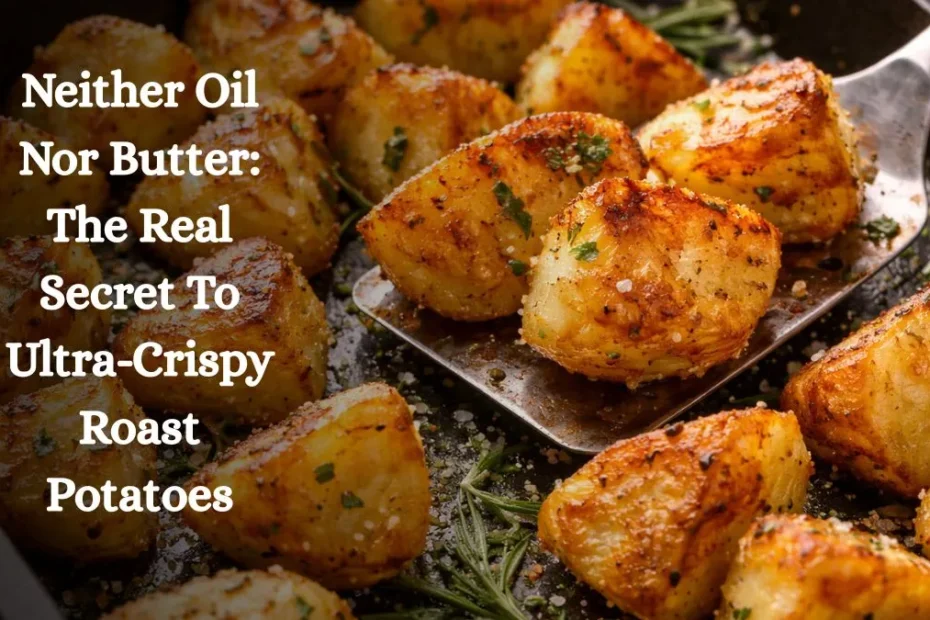
Imagine breaking into a perfectly roasted potato. The outside crackles loudly, revealing a soft, fluffy center that melts in your mouth. That ideal contrast between crunchy crust and tender interior is what everyone wants.
Yet many home cooks end up with pale, soft, or unevenly cooked potatoes—even after using plenty of oil or butter.
The truth may surprise you. The crispiest roast potatoes are not created by adding more fat. Instead, professional chefs rely on a science-based technique that transforms the potato’s surface before it ever reaches the oven.
Let’s explore this powerful method, understand the science behind it, and learn exactly how to recreate restaurant-quality crispy roast potatoes at home.
Why Oil and Butter Alone Don’t Create Crispiness
While oil and butter help promote browning, they do not solve the main issue: surface moisture.
Potatoes contain high amounts of water. When smooth potatoes go directly into a hot oven, steam builds up first. This trapped steam softens the outer layer and prevents a crispy crust from forming properly.
Even with generous fat:
- Steam delays browning
- The exterior stays smooth
- Crisp edges struggle to develop
To achieve true crunch, the potato’s outer layer must be altered before roasting.
The Game-Changing Method: Alkaline Parboiling
The real secret is parboiling potatoes in slightly alkaline water. This means adding a small amount of baking soda to boiling water.
This simple step does three important things:
- Breaks down the outer potato cell structure
- Creates a rough, starchy coating
- Speeds up browning during roasting
The result? Tiny ridges and rough edges that turn into a deeply golden, ultra-crispy crust in the oven.
No amount of oil or butter alone can produce this effect.
How Baking Soda Transforms the Potato
Adding baking soda increases the pH level of the water, making it more alkaline. Higher alkalinity weakens the pectin, which holds potato cells together.
This causes:
- The outer layer to soften quickly
- Starch to release onto the surface
- A fuzzy, mashed-like coating to form
When roasted, that starchy coating becomes an intensely crispy shell.
This same scientific principle is widely used in professional kitchens for consistent results.
Step-By-Step Guide To Perfect Crispy Roast Potatoes
Ingredients
- High-starch potatoes (Yukon Gold, Maris Piper, or Russet)
- Water
- Baking soda
- Salt
- Optional small amount of oil or butter
Step 1: Choose High-Starch Potatoes
For maximum crispiness, use floury or high-starch potatoes.
Best options:
- Yukon Gold
- Maris Piper
- Russet
Avoid waxy or baby potatoes. They hold their shape too firmly and resist crisping.
Step 2: Peel and Cut Into Large Pieces
Peel and cut the potatoes into chunky pieces.
Why large chunks work better:
- Fluffier interiors
- Stronger crust-to-soft contrast
- Less risk of drying out
Make sure pieces are similar in size for even cooking.
Step 3: Parboil In Alkaline Water
Bring a large pot of water to a boil. Add:
- 1 tablespoon salt
- ½ teaspoon baking soda per liter of water
Add the potatoes and boil for 8–10 minutes.
The edges should feel tender while the centers remain firm.
Step 4: Drain and Rough Up the Surface
Drain the potatoes completely and return them to the hot pot.
Now shake the pot vigorously.
The goal is to:
- Break up the outer layer slightly
- Create a starchy coating
- Form rough edges
Let the potatoes steam-dry for 2–3 minutes before seasoning.
This rough texture is the foundation of crunch.
Step 5: Season Before Roasting
Season the potatoes before placing them in the oven.
Add:
- Salt
- Pepper
- Garlic powder or rosemary (optional)
If using oil or butter, apply only a light coating. You’re enhancing crispness—not depending on fat to create it.
Step 6: Roast At High Heat
Preheat your oven to 220°C (425°F).
Spread potatoes on a hot tray with space between them.
Roasting process:
- Roast undisturbed for 25 minutes
- Flip once
- Roast another 20–25 minutes
They should turn deeply golden and sound crisp when tapped.
Why This Technique Beats Frying?
Deep frying may seem like the ultimate path to crunch. However, alkaline parboiling creates a crust from starch—not oil.
Advantages include:
- Crispier surface texture
- Less grease
- More natural potato flavor
- Reduced oil usage
You get deep-fried level crunch with significantly less fat.
Common Mistakes That Reduce Crispiness
Avoid these errors:
- Skipping baking soda
- Using waxy potatoes
- Overcrowding the tray
- Flipping too early
- Adding butter too soon
Each of these traps steam and prevents proper crust formation.
Can You Skip Oil Completely?
Yes, you can roast these potatoes without any fat.
The alkaline crust will still crisp beautifully.
However:
- A small amount of oil improves flavor
- Texture remains excellent either way
For those following oil-free diets, this method works exceptionally well.
Why Professional Kitchens Prefer This Method?
Restaurants value techniques that are:
- Reliable
- Scalable
- Cost-effective
- Consistent
This method produces dramatic crunch every time while reducing oil usage. It’s efficient, simple, and rooted in food science.
The secret to unforgettable crispy roast potatoes isn’t extra oil or premium butter—it’s understanding how to change the potato’s structure. By using alkaline parboiling with baking soda, roughing up the surface, and roasting at high heat, you create a crust that is dramatically crunchier than traditional methods.
This approach transforms the potato from the inside out, allowing starch—not fat—to form the crisp shell. Once you try this technique, standard oil-roasted potatoes will feel underwhelming. It’s not a gimmick. It’s food science—and it delivers the crispiest roast potatoes you’ve ever tasted.
FAQs
1. Why does baking soda make roast potatoes crispier?
Baking soda raises the water’s pH, softening the outer layer of the potato and releasing starch, which forms a crispy crust during roasting.
2. Can I use this method with sweet potatoes?
This technique works best with high-starch white potatoes. Sweet potatoes contain different sugars and may not produce the same crispy effect.
3. How much baking soda should I use?
Use about ½ teaspoon of baking soda per liter of water. Using too much can affect flavor.
Related Posts